Here One Sweeps Week, Gone the Next: The Real Reason Your Favorite Anchor Keeps Moving Markets
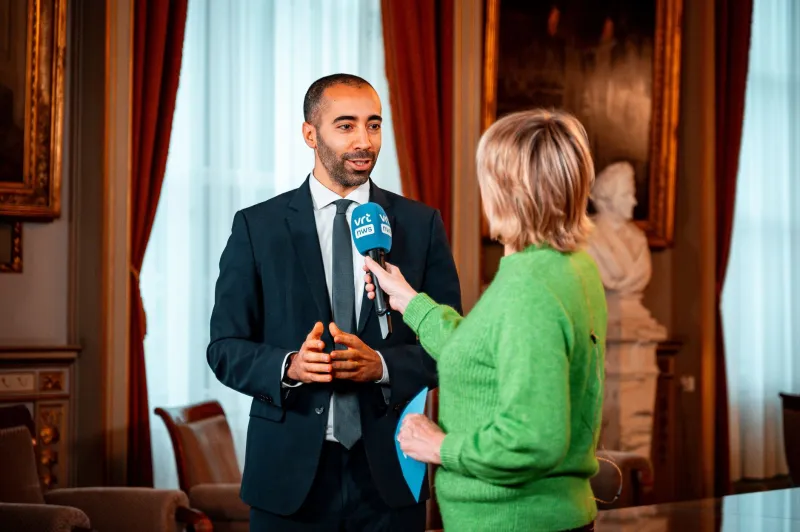
It happens more often than most viewers realize. You've watched the same reporter cover your city's flooding, your mayor's corruption trial, your high school football team's championship run — and then one Tuesday evening, they're simply not there anymore. No explanation on air, no social media farewell pinned to the top of their feed. Just gone.
If you're watching a Sinclair-owned station, there's a decent chance your favorite on-air personality didn't quit. They got shuffled.
The Network Advantage Nobody Talks About
Sinclair operates one of the largest collections of local television stations in the United States, with properties spread across dozens of markets from small regional cities to mid-sized metros. That scale creates something most independent stations can't offer their employees: a genuine career ladder built entirely within one company.
For a reporter cutting their teeth in a smaller market — think a station in a mid-sized Midwestern city — Sinclair's footprint means there's a plausible path to a larger market without ever changing employers. That's a significant draw. In traditional broadcasting, moving up the market-size ladder almost always meant jumping ship to a competitor. With Sinclair, the infrastructure exists to promote from within, just across state lines.
From the company's perspective, this internal mobility is a feature, not a bug. Talent that already understands Sinclair's production standards, editorial workflows, and technical systems is far easier to slot into a new market than an outside hire who needs weeks of onboarding.
How the Reassignment Process Actually Works
Sinclair's corporate structure includes regional management layers that communicate regularly with station general managers and news directors. When a larger market has an opening — say, a lead anchor slot opens up after a retirement — that vacancy doesn't automatically go to an external job posting. Station leadership and corporate talent teams assess who's already in the system.
Performance metrics matter here. Ratings contribution, social media engagement, viewer feedback, and tape reviews all factor into who gets flagged as ready for a bigger platform. Reporters who've demonstrated versatility — comfortable on breaking news, capable of long-form investigative work, reliable during live coverage — tend to rise faster through this internal pipeline.
It's worth noting that not every move is upward. Sinclair's network is large enough that lateral transfers happen too, sometimes driven by a specific market needing a particular skill set, sometimes because a station is launching a new program format and needs talent with experience in that style. And occasionally, yes, a move is less about opportunity and more about organizational reshuffling after a format change or budget realignment.
What Viewers Actually Lose (And Gain)
Let's be honest about the viewer side of this equation, because it's real and it matters.
Local news anchors and reporters build genuine community trust over time. When a reporter has covered your neighborhood for three or four years, they know the context. They know which city council member has a history with a particular issue. They know the backstory on the community center that's been fighting for funding since 2019. That institutional knowledge doesn't transfer to a new market automatically — it takes years to rebuild.
When a familiar face disappears without explanation, it can feel like a small but genuine loss. Viewers who've built a habit around a specific anchor's presence often describe a period of adjustment, sometimes even a temporary drift toward a competing station while they warm up to the new personality.
On the flip side, a fresh anchor arriving from another Sinclair market sometimes brings energy and perspective that a long-tenured team can lose over time. Someone who just spent two years covering a different region might ask questions about your city that locals have stopped asking because they assume the answer. That outsider-inside dynamic can occasionally sharpen coverage.
The Goodbye Problem
One consistent frustration viewers voice is the lack of formal on-air farewells. In the older era of local television, an anchor leaving a station was often a community event — a final broadcast, a retrospective package, a chance for viewers to say goodbye. That tradition has eroded significantly across the industry, and Sinclair stations aren't immune to the trend.
Some departures do get a send-off, particularly for anchors who've been at a station for a decade or more and have deep roots in the market. But many transfers — especially for reporters earlier in their careers — happen with little fanfare. The anchor wraps their last broadcast on a Friday, and by Monday a different face is in the chair.
If you've ever felt blindsided by a sudden anchor change, you're not imagining the lack of communication. It's a real pattern, and it reflects a broader industry shift away from treating on-air personalities as permanent community fixtures.
How to Keep Track When the Faces Change
If you're a viewer who genuinely wants to follow a reporter's career after they leave your local Sinclair station, social media is your best tool. Most on-air talent maintains professional accounts that they update when they make a market move. A quick search of their name plus their new city will usually surface their new station affiliation within a week or two of the transition.
Some reporters are also increasingly transparent about their moves on LinkedIn, treating market transitions the way professionals in other industries treat job changes — publicly and without the old-school broadcast mystique around talent movement.
For viewers more concerned with what their local station looks like going forward, giving the new anchor a genuine runway is worth it. It usually takes a full ratings period — sometimes two — before a new personality finds their footing in an unfamiliar market and starts building the viewer rapport that makes local news feel genuinely local.
The Bigger Picture for Local News
Sinclair's talent mobility system is a microcosm of a broader tension in local broadcasting: the push toward network-level efficiency versus the pull of authentic community connection. A reporter who knows your town is irreplaceable in ways that don't show up on any spreadsheet. But a company with hundreds of stations also can't afford to treat every market as a self-contained island with its own permanent cast.
For viewers, understanding that the shuffle is structural — not personal, not random — at least gives you a framework for what you're watching. The anchor who covered your community for years didn't forget about it. They just got promoted to cover someone else's.